3 hr
Reykjavík Whale Watching and Marine Life Cruise
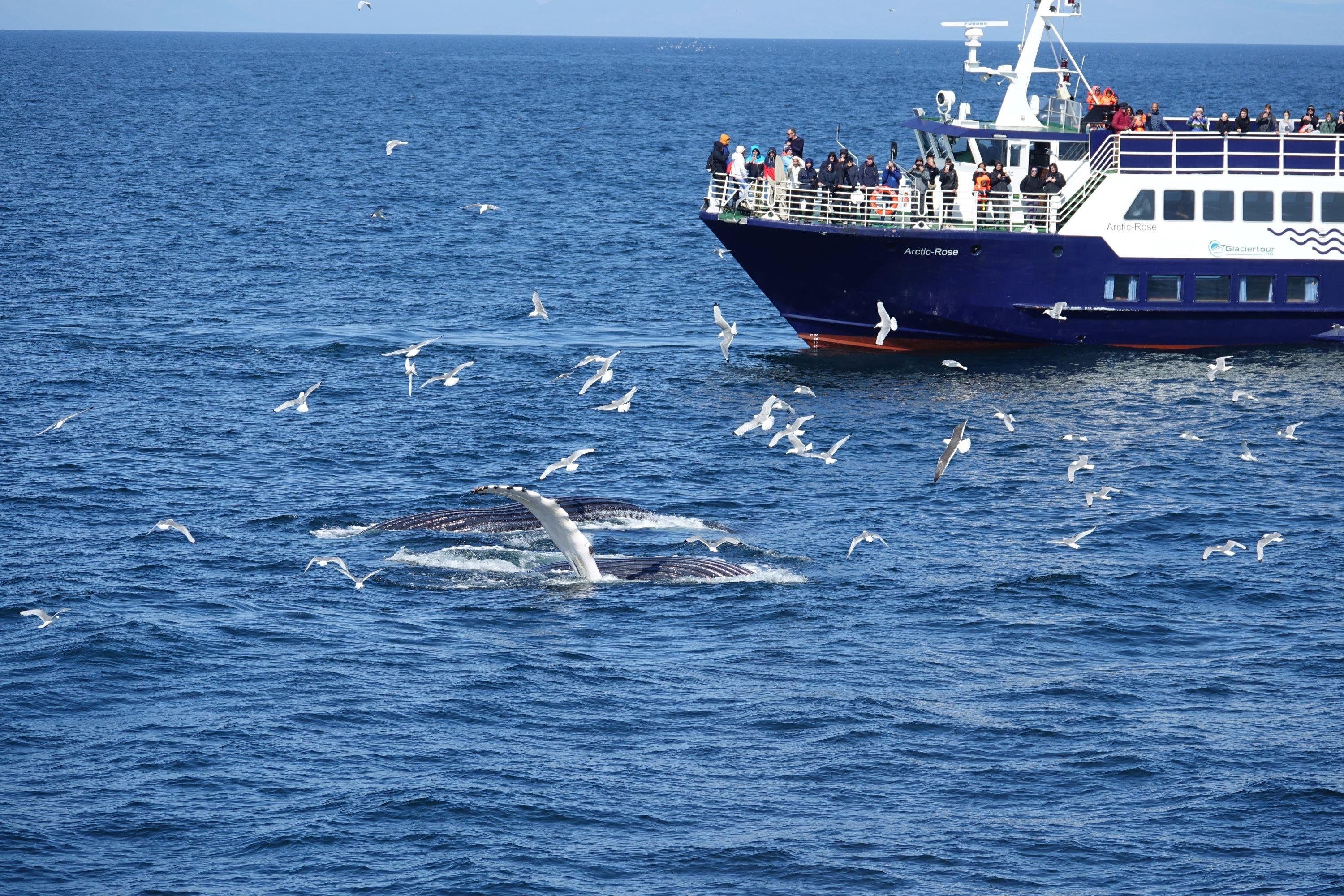
Sail from Reykjavík's harbor to encounter whales, dolphins, and porpoises against Iceland's dramatic coastline.
Reserve
Hand-picked by our editors — only the best 5 departures from 12 operators reviewed.
Verified partners for every tour, free cancellation where available, and instant confirmation on every booking.
3 hr
Sail from Reykjavík's harbor to encounter whales, dolphins, and porpoises against Iceland's dramatic coastline.
Reserve
2 hr
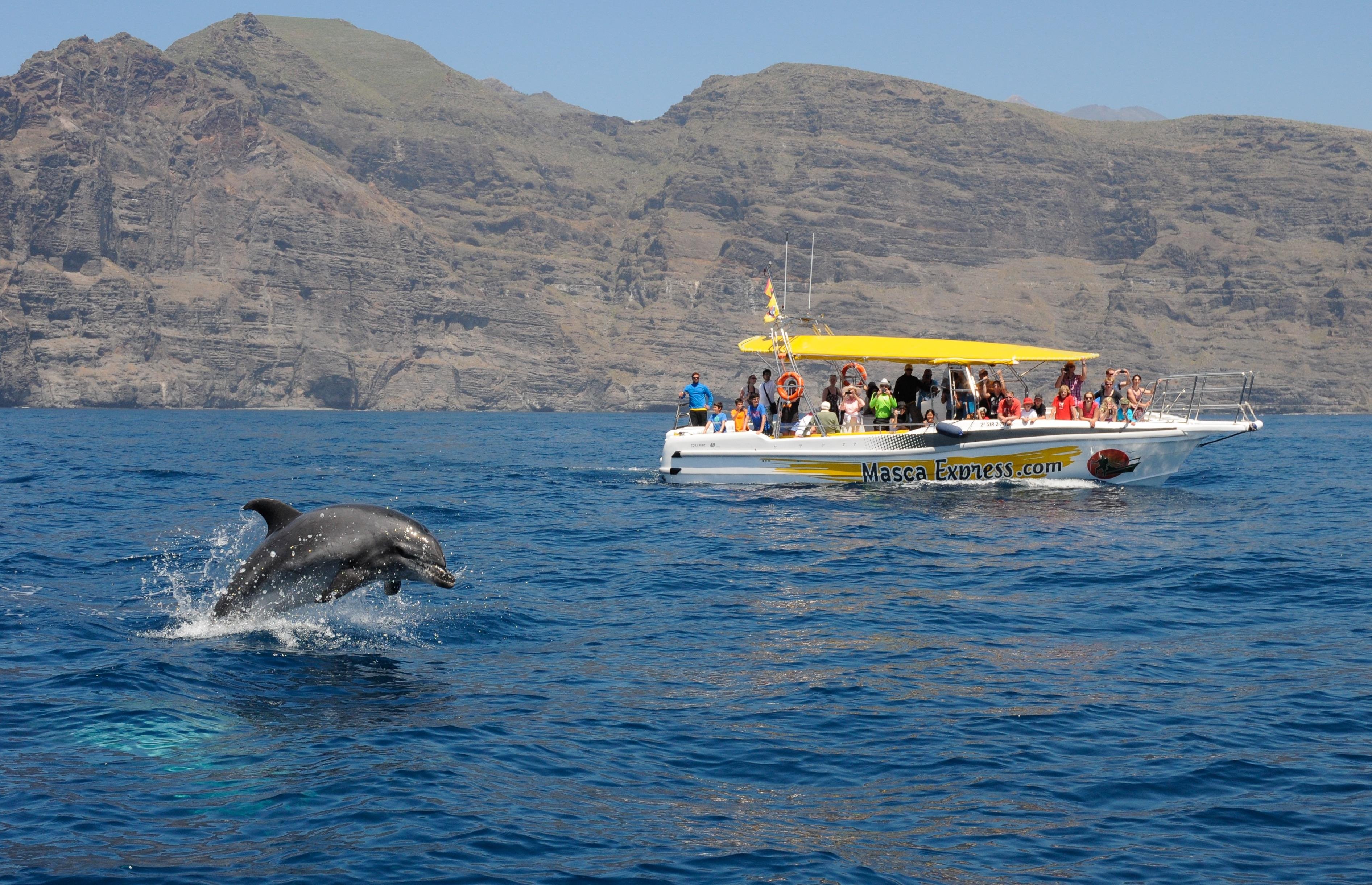
Spot marine mammals in their habitat, admire dramatic coastal cliffs, and swim in pristine Atlantic bays
Reserve
3 hr 30 min
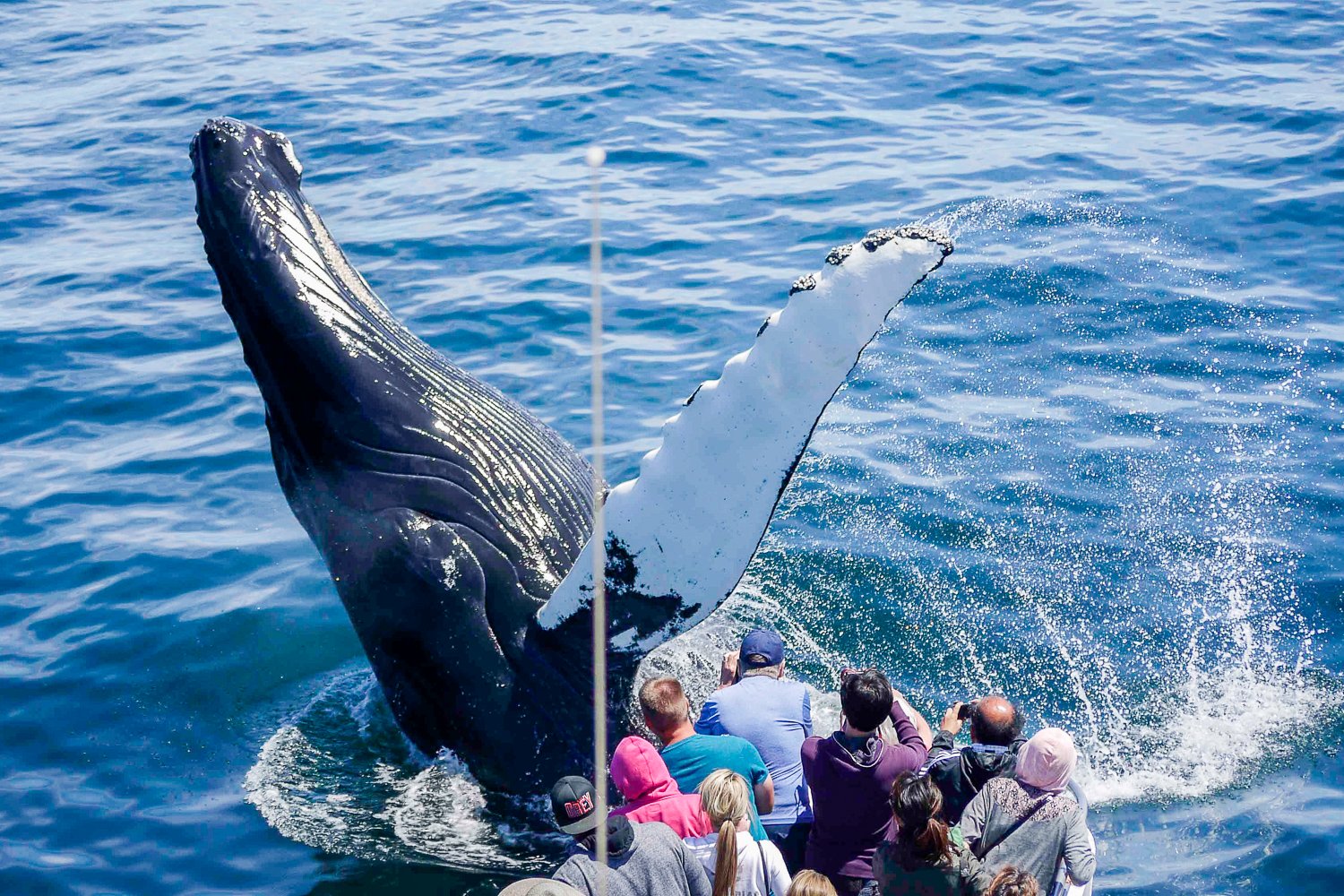
Spot humpback, fin, and minke whales aboard a high-speed catamaran with expert naturalists from New England Aquarium.
ReservePrices from verified partners. Availability updates in real time at checkout. Free cancellation policies apply where shown.
The landmarks, rooms, and views travelers on this tour remember — all visible on a single visit.
Features panoramic views and central access for wildlife photography.
The navigation center where vessels are steered toward marine habitats.
An educational area displaying models of regional species and whale behavior facts.
The most active part of the ship for front-facing wildlife sightings.
A sheltered area providing relief from the ocean wind.
They complement each other; most visitors who do both call cruises whale watching tours the more immersive experience for observing migratory marine mammals.
| Feature | Top pick Whale Watching Cruise | Land-Based Observation |
|---|---|---|
Proximity to marine life |
Direct water-level access | Distance-restricted coastal views |
Stability |
Vessel-dependent motion | Solid ground foundation |
Accessibility |
Requires boat boarding | Easily reached via shoreline |
Cost |
Commercial fee per tour | Free access to public lookouts |
Frequency of sightings |
High due to mobility | Lower depending on visibility |
Equipment |
Hydrophones and binoculars | Stationary spotting scopes |
| See tickets → |
Verdict: Securing cruises whale watching tickets provides a mobile vantage point that yields more consistent encounters than land-based methods, whereas a land-based cruises whale watching tour allows for flexible, self-paced observation.
Choose your ticket, select your date, and reserve in under two minutes. Secure checkout handled by our verified partner.
Instant confirmation by email, with a mobile voucher you can save offline. No printing, no queuing at a collection desk.
Arrive at the entrance, show your voucher on your phone, and walk in. Most tickets include priority or skip-the-line access.
Practical details for your visit straight from our verified partners — hours, access, rules, and how to get there.
Check your booking confirmation for specific pier number
Present your cruises whale watching tickets here
Many ports are accessible via local bus or train lines that stop at the waterfront. Check local transit apps for the nearest stop to your specific pier.
Use designated long-term port parking facilities. Factor in 30 minutes for transit from the parking area to your vessel's departure gate.
Wear layered clothing and non-slip rubber-soled shoes to maintain stability on deck. Windbreakers are recommended for ocean breezes during your cruises whale watching tour.
Keep personal items secure in a small waterproof bag. Larger luggage may be prohibited depending on vessel size and operator safety policies.
Use a neck strap for cameras and binoculars to prevent accidental drops during your cruises whale watching experience. Ensure your equipment is protected from salt spray and potential water splashing.
Not all vessels provide wheelchair access; check with your specific operator before booking cruises whale watching tickets. Crew members can often assist with boarding if notified in advance.
Mobile devices are permitted, but keep them secure when near the water's edge. Cellular signals may drop once you move away from coastal landmarks.
Cruises whale watching tours are suitable for most ages, though life jackets for children must be worn at all times. Check specific age requirements for infant participation with each operator.
Many cruises whale watching vessels provide light snacks or water for purchase on board. Guests are encouraged to bring refillable water bottles unless otherwise specified by the operator.
Service animals are generally permitted with prior notice, but other pets are strictly prohibited on most cruises whale watching excursions.
Arrival during the 08:00–10:00 window is ideal for viewing marine life. Always check specific operator documentation for vessel-specific safety briefings.
Check your booking confirmation for specific pier number
Present your cruises whale watching tickets here
Get directionsBest time to go, insider tips, nearby landmarks, and the cancellation fine print — flip through to skim what matters to you.
How crowds, weather, and events shift across the year.
Migratory species often appear during this peak season. Waters are generally temperate and ideal for maritime observation.
Longer daylight hours provide extended opportunities for wildlife spotting. Book your cruises whale watching tour early to secure the best deck positions.
This season offers moderate crowds and stable weather patterns. Marine activity remains high as seasonal species prepare for migration.
Some regions experience colder temperatures and rougher seas. Verify specific operator availability during this off-peak period.
Small details that turn a good visit into a great one.
Monitor local sea conditions 24 hours before your cruises whale watching tour. High wind warnings can lead to schedule changes.
Secure your cruises whale watching tickets online in advance. Weekend morning departures often sell out during peak season.
Take preventative measures before boarding if you are sensitive to sea travel. Stay on the central deck for increased stability during the voyage.
Even on cloudy days, UV rays reflect off the water. Wear high-SPF sunscreen and polarized sunglasses for better visibility.
Listen closely to the crew's safety briefing. Stay behind designated safety railings while the vessel is in motion.
Non-bookable sights within a short walk — free to visit, easy to pair.
Exhibits focus on regional whaling history and local naval traditions.
Flexible, no hidden fees.
Most cruises whale watching tours require cancellation at least 24 to 48 hours prior to departure for a full refund. Please refer to your specific operator documentation as the 0 USD entrance fee is not applicable to commercial bookings.
Hand-picked options within walking distance — pick a district for vibe, or a specific hotel for convenience.
Upscale rooms overlooking the main cruise terminal.
Commercial whale watching emerged in 1955 when a San Diego boat operator began charging one dollar for passengers to observe gray whales migrating along the California coast. Within two decades, the practice had spread to Iceland, New Zealand, South Africa, and the North Atlantic, establishing a seasonal industry worth over two billion dollars annually by the turn of the century. Today, more than thirteen million people embark on dedicated marine mammal observation voyages each year, spanning latitudes from the Arctic Circle to the sub-Antarctic. The global distribution of whale watching cruises reflects migratory corridors and feeding grounds tied to oceanographic phenomena. Iceland's tours intercept minke and humpback whales drawn to the nutrient-rich waters of Faxaflói Bay during the summer months. The canyon systems off Tenerife's southwest coast sustain resident populations of short-finned pilot whales and bottlenose dolphins year-round, creating one of the few locations where sightings approach ninety percent probability. New England's Stellwagen Bank, a submerged plateau twenty-five miles east of Boston, concentrates sand lance and Atlantic herring, attracting fin, sei, and North Atlantic right whales between April and October. Kaikoura's offshore trench, where the continental shelf drops to more than one thousand meters within two kilometers of shore, funnels deep-water species including sperm whales into observable range. South Africa's Walker Bay serves as a calving ground for southern right whales from June through November, with mothers and calves occupying shallow inshore waters within two hundred meters of the Hermanus cliffs. Vessel design for whale watching evolved from repurposed fishing trawlers to purpose-built catamarans with stabilized observation platforms, hydrophones for real-time echolocation monitoring, and onboard naturalist interpretation. Modern fleets employ a mix of rigid-hulled inflatables capable of rapid repositioning and larger vessels offering climate-controlled cabins and multiple viewing decks. Regulatory frameworks vary by jurisdiction: Iceland enforces hundred-meter minimum approach distances and prohibits pursuit of traveling pods, while New Zealand's Department of Conservation limits vessel numbers per whale and mandates no-approach zones for mothers with calves. The International Whaling Commission's guidelines, adopted by thirty-two coastal nations, recommend maximum speeds of six knots within three hundred meters of cetaceans and prohibition of swimming with large whales outside designated swim-with programs. The industry's economic footprint extends beyond ticket revenue. Coastal communities in Húsavík, Kaikōura, and Hermanus derive significant income from ancillary spending on accommodation, dining, and transportation linked to whale watching seasons. Research partnerships between tour operators and marine institutes have produced longitudinal datasets on population health, behavioral patterns, and habitat use, with photo-identification catalogs maintained across decades. Ongoing debates center on carrying capacity thresholds, cumulative acoustic disturbance from engine noise, and displacement effects when multiple vessels concentrate around individual animals during peak visitation windows.

"More than thirteen million passengers embark annually on dedicated marine mammal observation voyages spanning latitudes from the Arctic Circle to the sub-Antarctic."
A step-by-step walkthrough of the visit — what you'll see, how long each stage takes, and the details that matter.
You board at the designated pier between eight and nine in the morning, when sea conditions remain calm and light angles favor surface observation. The crew briefs you on safety protocols and sighting expectations as the vessel clears the harbor entrance, accelerating to cruising speed once beyond the breakwater. Within twenty to forty minutes—depending on the port—you reach the primary search area, identifiable by changes in water color marking upwelling zones or shelf edges. The first indication often arrives as a vertical blow column visible several hundred meters off the bow. The captain cuts throttle, and you move to the rail or upper deck as the animal surfaces again, dorsal fin breaking the waterline in a smooth arc. Naturalists identify the species by blow shape, fin morphology, and surfacing interval while you photograph the sequence. If regulations permit closer approach, the vessel repositions slowly, engine in neutral during the final drift. You watch the whale complete three or four breathing cycles before it sounds, flukes lifting vertically as it begins a deep dive. Throughout the two to three-hour voyage, you scan the horizon for additional blows, dorsal fins cutting the surface, or breaching events where animals leap clear of the water. Onboard hydrophones broadcast echolocation clicks when toothed whales hunt below the surface. You return to port mid-morning or early afternoon, the operator logging sighting data and species counts for submission to regional monitoring databases.
Yes, departures are scheduled throughout the week, with operating hours from 00:00–23:59 daily.
The best arrival window for these cruises whale watching tours is 08:00–10:00 to maximize marine activity sightings.
The entrance fee is 0 USD, as this is a commercial service booked per tour.
Cancellation policies for cruises whale watching tickets vary by operator, but usually require 24–48 hours notice for a full refund.
While many operators offer snacks for purchase, you may bring light refreshments; however, glass bottles are typically prohibited during the cruise.
Yes, children are welcome on most cruises whale watching excursions, but they must wear life jackets and follow all safety instructions.
Bring sunscreen, sunglasses, a windproof jacket, and your camera to capture the best moments of your cruises whale watching experience.
Most locations are reachable via local port transit; check your specific operator documentation for your designated pier address.
Yes, you can easily visit nearby maritime museums or waterfront parks after completing your cruises whale watching trip.